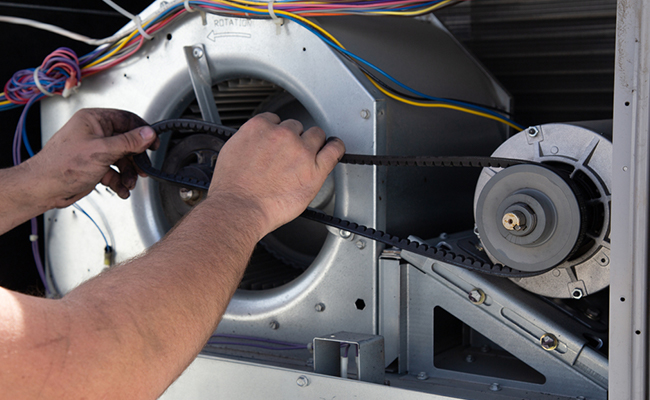
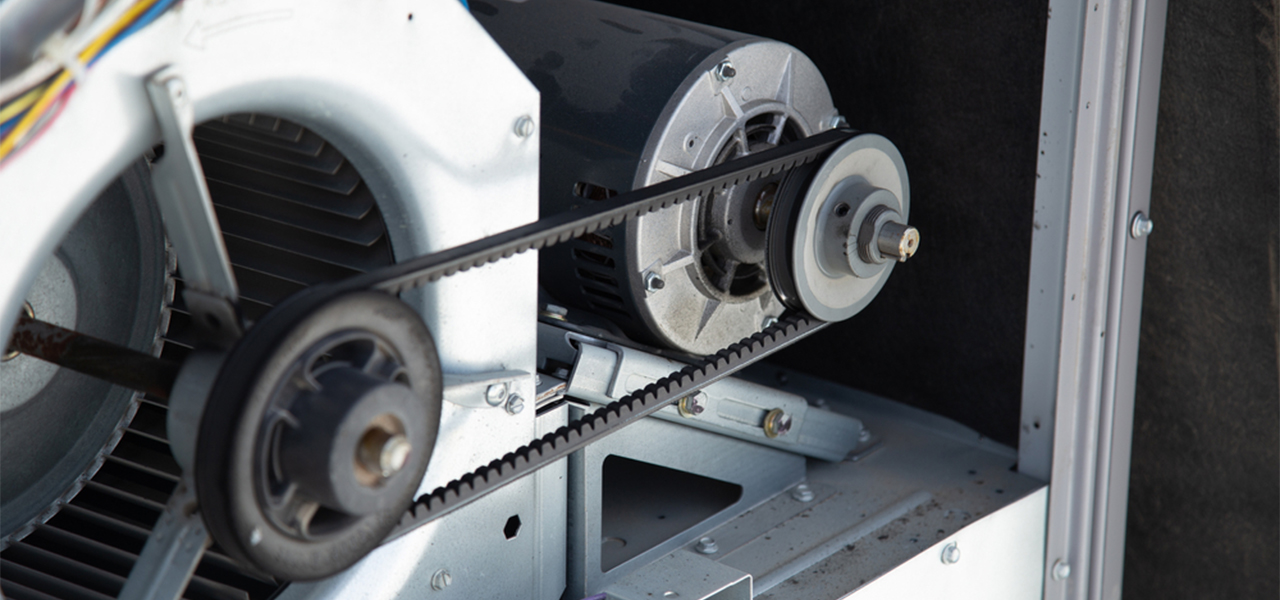
HVAC belts are vital components in many heating, ventilation, and air conditioning systems, primarily used to transmit power from motors to moving parts such as fans and blowers. These belts are commonly found in belt-driven air handling units and rooftop systems, where they enable the motor to drive the fan shaft indirectly. By connecting pulleys mounted on the motor and fan shafts, HVAC belts help maintain airflow, making them essential for effective ventilation and temperature control.
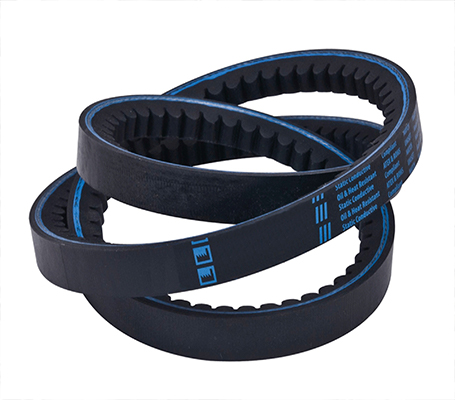
There are several types of belts used in HVAC systems, with V-belts and serpentine belts being the most common. V-belts are favored for their efficiency and ability to maintain tension and grip with minimal slippage, while serpentine belts can drive multiple components at once with a single, continuous belt. The choice of belt depends on the specific system design, the required torque, and the operating conditions. Belts are typically made from rubber or synthetic materials with added strength fibers for durability and flexibility.
Proper tensioning and alignment of HVAC belts are crucial for optimal system performance. Over time, belts can wear, stretch, or become misaligned, leading to slippage, noise, reduced airflow, or even motor damage. Regular inspection and maintenance—such as checking for cracks, fraying, or looseness—are necessary to ensure reliable operation. Many facilities follow a preventive maintenance schedule to replace belts before failure occurs, avoiding costly downtime and system inefficiencies. In modern systems, beltless or direct-drive configurations are sometimes preferred for high-efficiency applications, but belt-driven systems remain widely used for their cost-effectiveness and simplicity.